
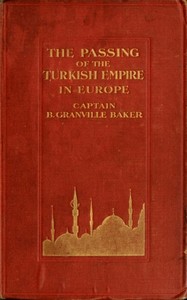
The Passing of the Turkish Empire in Europe by B. Granville Baker
B. Granville Baker's The Passing of the Turkish Empire in Europe is a unique piece of history. It's not written by a distant scholar years later, but by a man who walked the dusty roads and bustling cities as the empire was breathing its last.
The Story
There isn't a single plot with characters in the traditional sense. Instead, the 'story' is the collapse of a giant. Baker acts as our guide through the Balkans in the years leading up to World War I. He shows us the fading grandeur of Ottoman rule—the aging palaces, the complex bureaucracy grinding to a halt. He then takes us into the heart of the nationalist movements that are tearing the empire apart: Serbs, Bulgarians, Greeks, and others all pushing for independence. The book captures the violent birth pangs of new countries like Albania and the redrawing of maps that would sow seeds of future conflict. It's a front-row seat to the end of an era.
Why You Should Read It
What makes this book special is Baker's perspective. He's a traveler, not a politician. He's interested in people. You'll read about shopkeepers, farmers, soldiers, and refugees. He describes their daily lives, their hopes, and their confusion. This personal touch makes a huge historical event feel immediate and human. You understand the change not just as a political shift, but as something that altered what people ate, how they spoke, and who they thought they were. Baker has a sharp eye for the ironic and the tragic, and he isn't afraid to point out the messiness and contradictions of the whole process.
Final Verdict
This book is perfect for history buffs who want more than just facts and figures. It's for anyone curious about why the Balkans are the way they are today. If you enjoy travel writing with a historical edge, or first-person accounts from turning points in history, you'll find this incredibly rewarding. A word of caution: it's a book from 1913, so some of the language and viewpoints are of their time. But read with that in mind, and you'll find a compelling, vivid, and surprisingly accessible portrait of a world disappearing before the author's eyes.
This publication is available for unrestricted use. It is available for public use and education.
Karen White
1 month agoI took detailed notes while reading through the chapters and the practical checklists included are a great touch for real-world use. This has become my go-to guide for this specific topic.
Susan Rodriguez
11 months agoI was skeptical about the depth of this book at first, but the way the author breaks down the core concepts is remarkably clear. Definitely a five-star contribution to the field.
James Wilson
1 month agoThe peer-reviewed feel of this content gives me great confidence.
Michael Taylor
1 year agoThe layout of the digital version made it easy to start immediately, the clarity of the writing makes even the most dense sections readable. I’ll definitely be revisiting some of these chapters again soon.






Jessica Martin
9 months agoHaving read the author's previous works, the author clearly has a deep mastery of the subject matter. It cleared up a lot of the confusion I had previously.