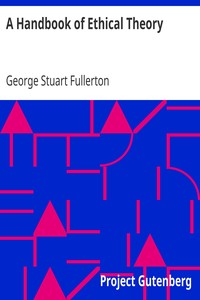
A Handbook of Ethical Theory by George Stuart Fullerton
Let's be clear: this book has no characters, no plot twists, and no cliffhangers—unless you count the cliffhanger of figuring out how to live a good life. 'A Handbook of Ethical Theory' is exactly what the title promises: a systematic guide. Fullerton breaks down the landscape of moral philosophy into understandable parts. He starts by asking what we even mean by 'good' and 'duty,' then explores different ethical systems that have tried to answer those questions. He looks at the idea that pleasure is the ultimate good, the theory that we have an innate moral sense, and the utilitarian focus on the greatest good for the greatest number. His method is comparative and critical; he lays out each theory's logic and then examines where it might stumble in real-world application.
Why You Should Read It
I picked this up thinking it would be a chore, but I was surprised. Fullerton has a direct, clear style. He’s not showing off; he’s trying to explain. Reading it feels like having a very smart, slightly old-fashioned professor walk you through the basics, making sure you understand each step before moving on. The value isn't in agreeing with him on every point (you won't), but in the mental workout. It forces you to question the 'why' behind your own choices. Is something right because it feels right? Because it helps others? Because a rule says so? This book gives you the vocabulary and framework to have that conversation with yourself. It’s surprisingly empowering.
Final Verdict
This is not a beach read. It’s for the curious person who’s tired of shallow debates about ethics and wants to understand the foundations. It’s perfect for students dipping their toes into philosophy, for book club members who want to discuss something substantive, or for anyone who has a nagging feeling that their moral compass could use a bit of calibration. If you enjoy thinking deeply about how we decide what matters, this century-old handbook remains a remarkably clear and useful guide.
This book is widely considered to be in the public domain. Thank you for supporting open literature.

George Rodriguez
1 year agoI was skeptical at first, but it manages to explain difficult concepts in plain English. Absolutely essential reading.