
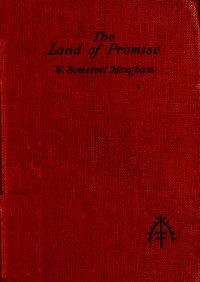
The Land of Promise: A Comedy in Four Acts by W. Somerset Maugham
Let's set the stage. It's England, just before World War I. Norah Marsh, after years of thankless work as a companion, inherits a small bit of money. Inspired by letters from Canada promising independence and wide-open spaces, she decides to use her inheritance to start fresh there as a farmer. But first, she visits her only relative, her wealthy cousin Reginald Hornby, hoping for some family support or at least a blessing.
The Story
Reginald and his snobby wife are appalled. The idea of a gentlewoman doing manual labor in the colonies is scandalous to them. They don't see her courage; they see a social embarrassment. The play unfolds in their luxurious home, where Norah's hopeful plans smash against their rigid, conventional expectations. Reginald tries everything to dissuade her, offering a safe but suffocating life as a dependent in his household instead. The entire conflict plays out in sharp, witty conversations. Will Norah cave to the pressure of a 'respectable' but miserable life in England, or risk everything for the harsh, unknown promise of Canada? The title becomes deeply ironic as we watch her fight for her own version of it.
Why You Should Read It
I love this play because it's so much more than its early 1900s setting. At its heart, it's about a woman screaming for agency in a world that wants to politely shush her. Norah isn't a dramatic heroine; she's practical, determined, and quietly furious. Maugham writes her with such clarity. You feel her claustrophobia in that fancy drawing room. The comedy comes from the sheer absurdity of the Hornbys' priorities and the brilliant way Norah punctures their pomposity. It asks big questions that still ring true: What do we owe our family? What does 'a better life' actually cost? Is security worth your freedom?
Final Verdict
This is perfect for anyone who enjoys character-driven stories where the real battle happens in conversation. If you like authors like Jane Austen for their social critique or Oscar Wilde for their witty dialogue, you'll find a similar vibe here, though Maugham has a drier, more modern edge. It's also a great, quick read for people curious about pre-war social attitudes but who don't want a heavy history book. Basically, if you've ever had to defend your life choices to a skeptical relative over tea, you'll feel a deep, satisfying kinship with Norah Marsh.
No rights are reserved for this publication. It is available for public use and education.
Robert Clark
2 years agoGood quality content.
Richard Lopez
1 year agoA bit long but worth it.
Andrew Johnson
1 year agoSimply put, the arguments are well-supported by credible references. I couldn't put it down.
Jackson Jones
6 months agoGreat read!




Michelle Clark
6 months agoAs someone who reads a lot, the storytelling feels authentic and emotionally grounded. Exactly what I needed.